PlayZoneMasti Play free
Sports guide · updated 10 November 2026

Football rules for beginners

Everything you need to follow or play football: how a match works, offside in plain words, fouls and cards, set pieces, and the latest changes to the Laws of the Game.
Players11 per team (one goalkeeper)
Match2 halves of 45 minutes
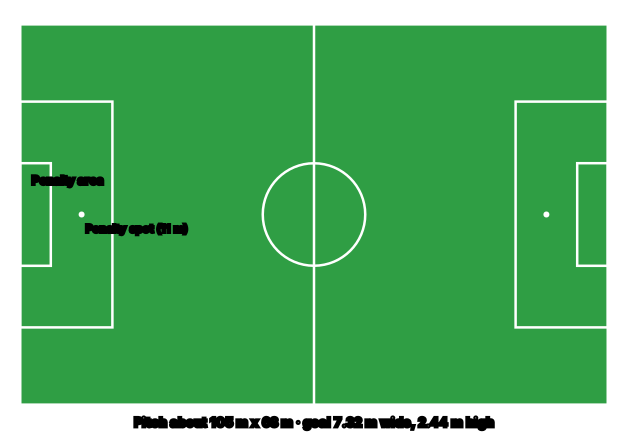
Goal7.32 m wide, 2.44 m high
SubstitutesUp to 5 in most top competitions
BallRound, size 5 for adults
RulesIFAB Laws of the Game 2025/26

How a match works

Football pitch: centre circle, penalty areas, goal areas, penalty spots and goals
  • Two teams of 11 players, one of them the goalkeeper. Score by getting the whole ball over the goal line between the posts and under the crossbar.
  • A match is two halves of 45 minutes, plus added time for stoppages. Knockout matches may add extra time (2 x 15 minutes) and then penalties.
  • Only the goalkeeper may handle the ball, and only inside their own penalty area. Everyone else plays with feet, head and body.

Restarts: throw-ins, goal kicks and corners

  • Throw-in: the ball goes out over a side line. A player of the other team throws it in with both hands from behind and over the head, both feet on the ground.
  • Goal kick: the attacking team last touched the ball before it crossed the goal line (not a goal). The defending team kicks it from inside its goal area.
  • Corner kick: the defending team last touched it before it crossed its own goal line. The attackers kick it from the corner.
  • Goalkeeper time limit: since 2025/26, a goalkeeper holding the ball in the hands for more than 8 seconds gives the other team a corner kick. The referee counts down the last five seconds.

Offside in plain words

An attacker is offside if, at the moment a team-mate plays the ball forward to them, they are in the opponents' half and nearer the goal line than both the ball and the second-last defender (the goalkeeper usually counts as one of the two).

  • Being in an offside position is not an offence by itself; it only counts if the player then takes part in play.
  • There is no offside from a throw-in, goal kick or corner kick, or in your own half.
  • The punishment is an indirect free kick to the defending team.

Fouls, free kicks and cards

  • Kicking, tripping, pushing, holding, charging recklessly or handling the ball deliberately are fouls. The other team gets a free kick; opponents stand at least 9.15 m away.
  • A foul by a defender inside their own penalty area gives a penalty kick: one shot from the penalty spot, 11 m out, against the goalkeeper.
  • Yellow card: a caution. Two yellows in one match make a red.
  • Red card: sent off; the team plays with one player fewer for the rest of the match.
  • In many top competitions, the VAR (video assistant referee) can recommend a review of goals, penalties, red cards and mistaken identity.

Tips for beginners

  • Use the inside of your foot for short, accurate passes.
  • Keep your head up when you have the ball, and look before you receive it.
  • Move into space after you pass: football is about the other 89 minutes when you don't have the ball.
  • Wear shin guards; they are compulsory in official matches.

Football questions

How long is a football match?

Two halves of 45 minutes with a break of up to 15 minutes, plus added time. Knockout matches can add 30 minutes of extra time and a penalty shoot-out.

What is offside in football?

An attacker is offside if, when a team-mate plays the ball to them, they are in the opponents’ half and nearer the goal line than both the ball and the second-last defender, and they then take part in play.

What is the new 8-second rule for goalkeepers?

Since the 2025/26 Laws, a goalkeeper who holds the ball in the hands for more than eight seconds concedes a corner kick to the other team.

How many substitutes are allowed in football?

The Laws allow up to five substitutes in top competitions, used in no more than three stoppages plus half-time; each competition sets its own number.

What is the difference between a yellow and a red card?

A yellow card is a caution; two in one match make a red. A red card sends the player off, and the team continues with one player fewer.

Sources: IFAB: Laws of the Game · IFAB: changes for 2025/26

More guides

Learn something else

A solved 3 by 3 cube
Puzzles

Rubik's Cube

The easy layer-by-layer method in 7 steps, with pictures and the moves to remember.

Read the guide
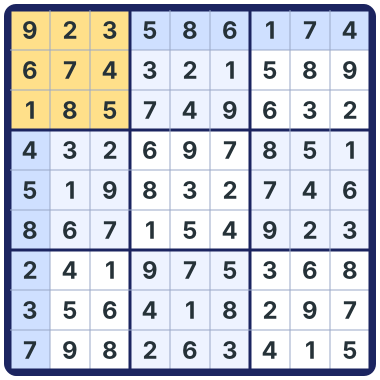
A solved Sudoku grid with a row, a column and a box highlighted
Puzzles

Sudoku

The rules and the two methods that solve every easy puzzle, with picture examples.

Read the guide
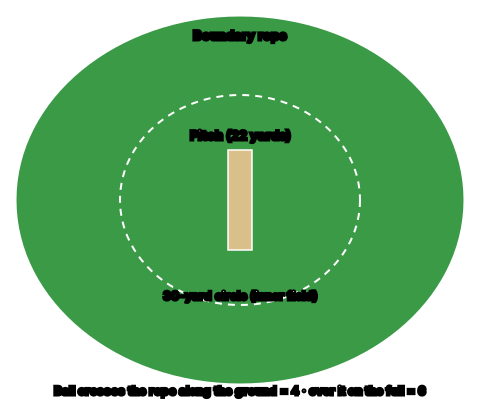
Cricket field with the pitch and the 30-yard circle
Sports

Cricket

Overs, runs, wickets, LBW and the three formats, explained simply.

Read the guide
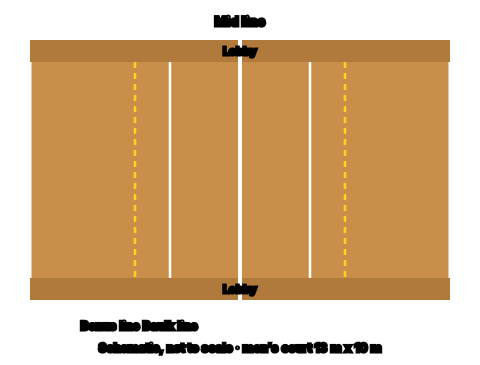
Kabaddi court with mid line, baulk lines, bonus lines and lobbies
Sports

Kabaddi

Raids, touch and bonus points, tackles, super tackles and all outs, explained simply.

Read the guide
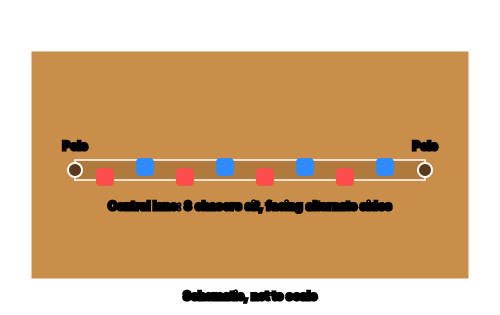
Kho-kho field with two poles and eight chasers sitting in the central lane
Sports

Kho-Kho

Chasers and runners, the “kho”, the poles and scoring, explained simply.

Read the guide
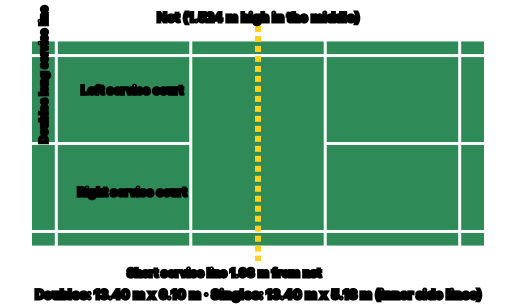
Badminton court with singles and doubles lines
Sports

Badminton

Scoring (including the new 15-point games), serving, the court and faults.

Read the guide
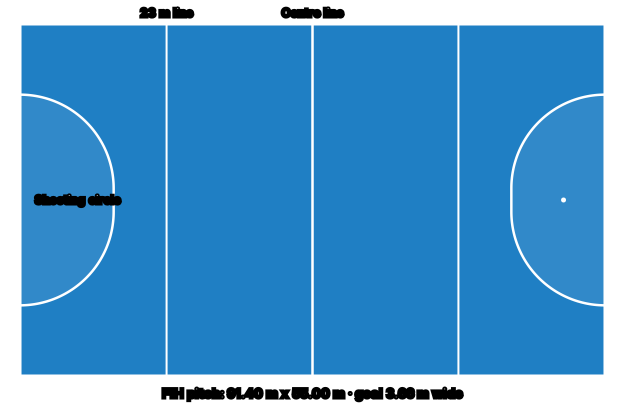
Hockey pitch with shooting circles and 23-metre lines
Sports

Hockey

Players, quarters, the shooting circle, penalty corners and cards, explained simply.

Read the guide
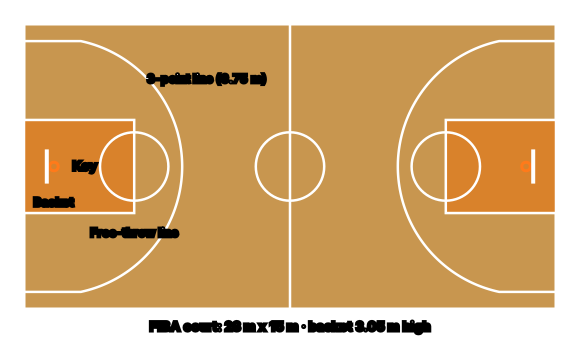
Basketball court with the key and three-point lines
Sports

Basketball

Scoring, dribbling, time rules, fouls and free throws, explained simply.

Read the guide
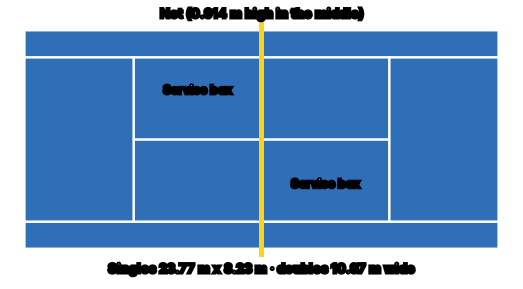
Tennis court with singles and doubles lines and service boxes
Sports

Tennis

Points, games, sets, tie-breaks and the serve, explained simply.

Read the guide
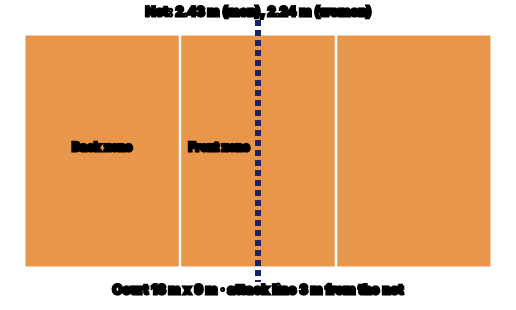
Volleyball court with the net and attack lines
Sports

Volleyball

Scoring, three touches, rotation and the libero, explained simply.

Read the guide

Time for a game?

Ludo, Snakes & Ladders and quick games like Tic-Tac-Toe, free in your browser.

Play free games