
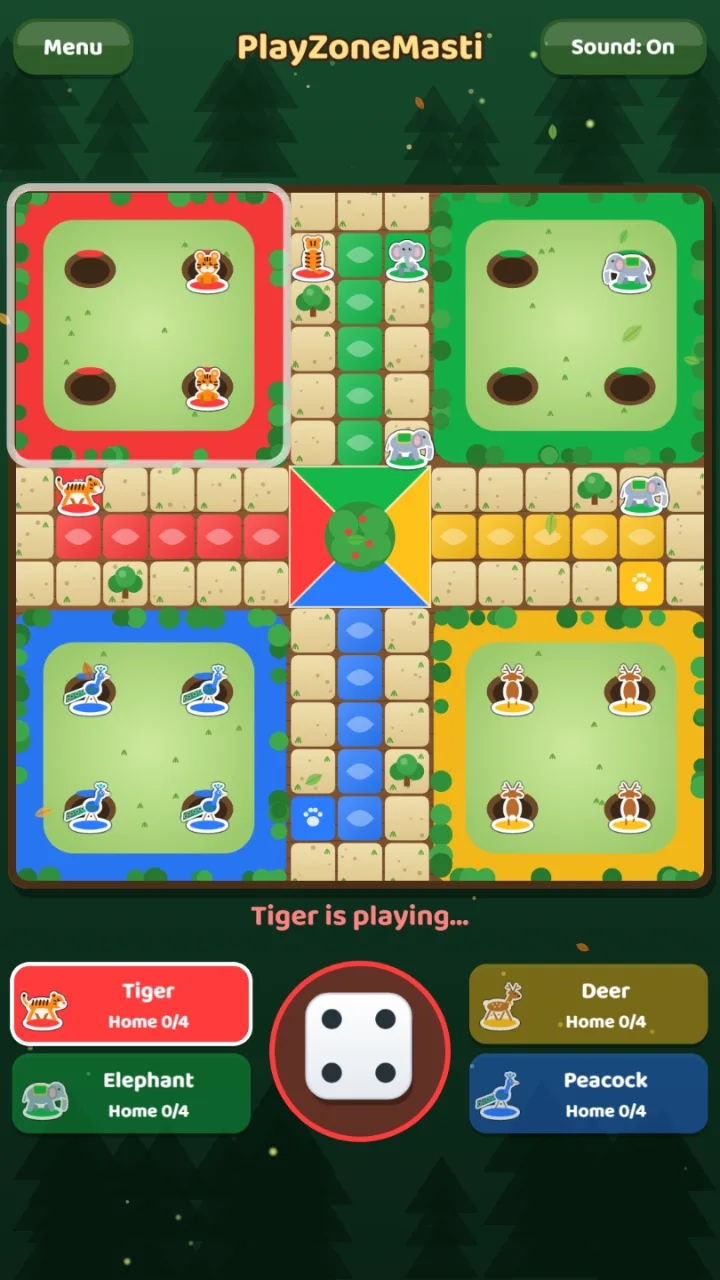
Ludo
Classic Indian rules. Swimmers glide through waterways, jungle animals pounce, stomp, leap and fan their feathers on a six, and a capture sends the other piece flying home.
Play Ludo Rules and tipsSnakes that breathe and strike, ladders that glow, and pieces that climb and tumble. Choose one of five boards from Easy to Expert and race to 100.
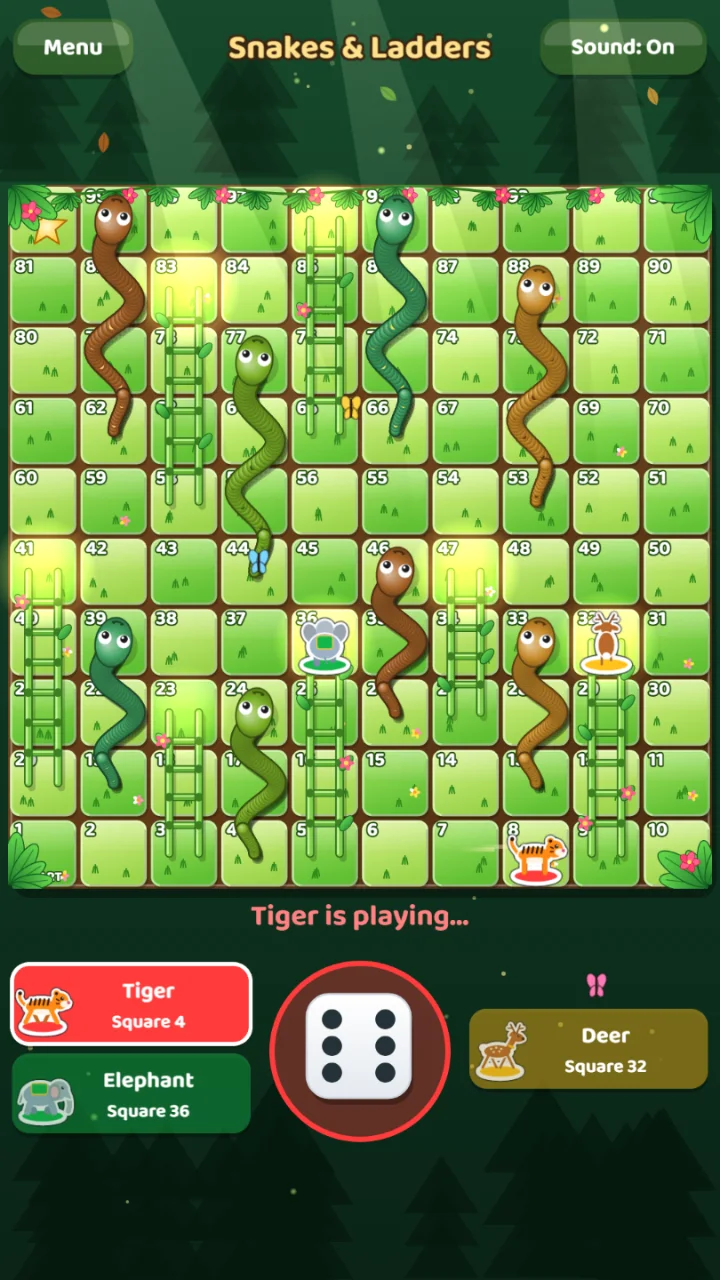
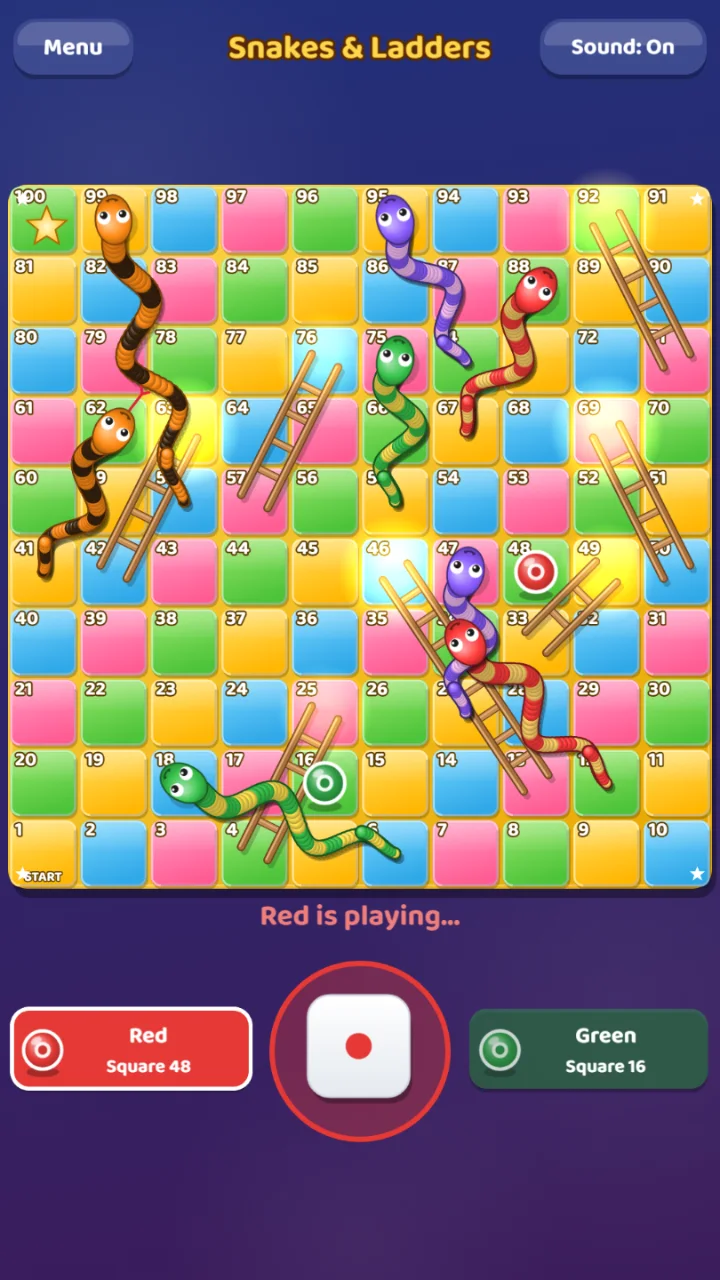
Every board comes in Classic, Water and Forest, with the same rules everywhere.
Playing against the computer? When a snake is about to bite, you can watch a short ad for a Snake shield or a Lucky re-roll. It is always your choice.
Snakes and Ladders began in India as Moksha Patam, also called Gyan Chaupar. Ladders stood for good deeds that lift you up and snakes for bad ones that pull you down, with the last square standing for moksha. The game travelled the world and became the race to 100 children everywhere know today.
Yes. You must roll exactly the number of squares left. If the dice is too big, your piece waits and you try again on your next turn.
Yes, a 6 lets you roll again. Three 6s in a row and you lose the turn.
No. Pieces can share a square and nobody is sent back by another player, only by snakes.
Easy or Medium for a quick, friendly game. Hard and Expert for players who like a long fight back from the snakes.
It began in India as Moksha Patam, also called Gyan Chaupar, a game in which ladders stood for good deeds and snakes for bad ones.
It is free and never uses real money: no deposits, no cash prizes, no betting.
Classic Indian rules. Swimmers glide through waterways, jungle animals pounce, stomp, leap and fan their feathers on a six, and a capture sends the other piece flying home.
Play Ludo Rules and tips